
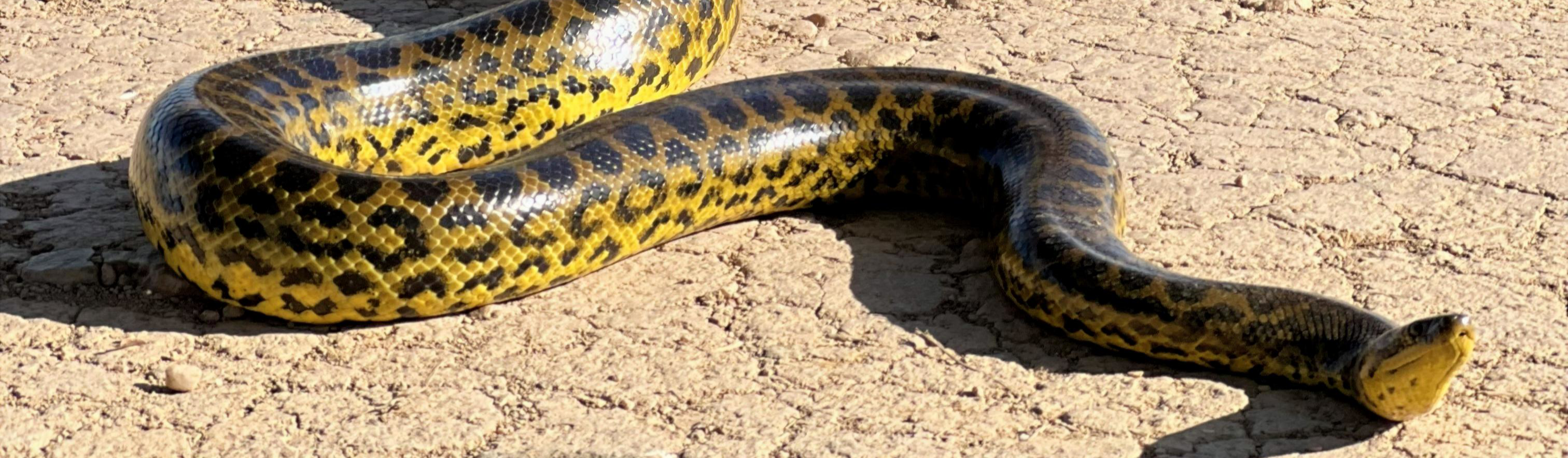
The Yellow Anaconda (Eunectes notaeus) is one of the most fascinating and powerful snakes in South America, known for its strength and semi-aquatic lifestyle. Commonly found in wetlands such as the Pantanal and the Gran Chaco, this species thrives in slow-moving waters, marshes, and flooded grasslands. Unlike its larger relative, the green anaconda, the yellow anaconda is slightly smaller but still an impressive predator. Its distinctive yellowish coloration with dark blotches provides excellent camouflage in muddy waters and dense vegetation.
This snake is highly adapted to aquatic environments, spending much of its time submerged while waiting to ambush prey. It is a non-venomous constrictor, meaning it captures and subdues its prey by coiling around it and applying pressure. The yellow anaconda feeds on a wide variety of animals, including fish, birds, and small mammals, playing an important role in maintaining ecological balance.
Despite its intimidating reputation, the species generally avoids human interaction and is rarely dangerous unless provoked.
As a top predator in its ecosystem, it contributes significantly to controlling prey populations and supporting biodiversity. However, habitat loss and hunting continue to pose threats to its survival in some regions.
Characteristics
Scientific Name: Eunectes notaeus
Size: Up to 3–4 meters (10–13 feet)
Weight: Around 25–40 kg (55–88 lbs)
Lifespan: Approximately 15–20 years
Habitat: Wetlands, swamps, rivers, and floodplains
Diet: Carnivorous (fish, birds, mammals, reptiles)
Behavior: Solitary and mostly nocturnal
Hunting Method: Constrictor
Distinct Feature: Yellow body with dark spots for camouflage
Ecological Role: Apex predator.