
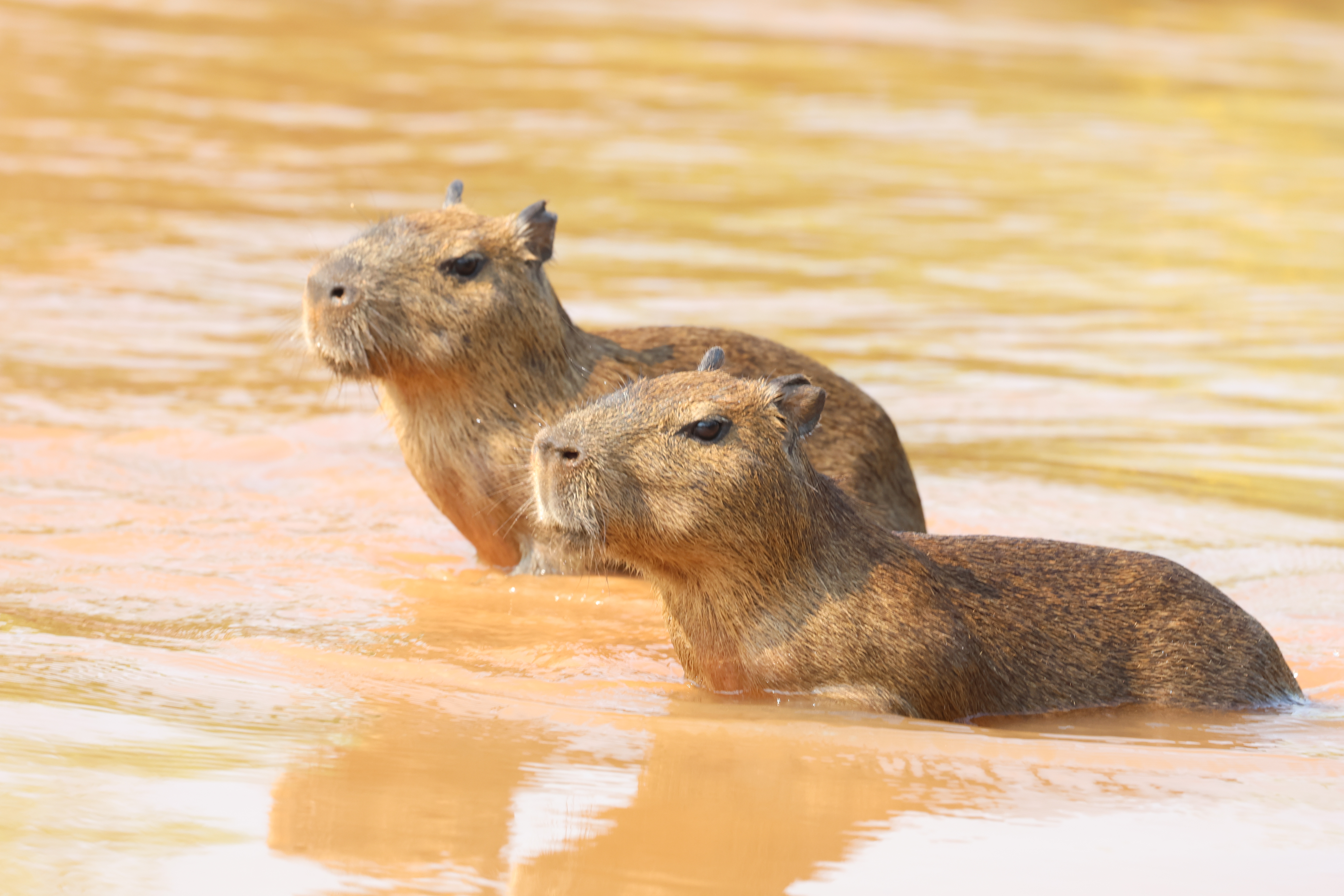
The capybara (Hydrochoerus hydrochaeris), known as capivara in Brazil, is the largest rodent on Earth. It inhabits rivers, lakes, marshes, and wetlands throughout South America, including the Pantanal and Amazon regions.
Capybaras are highly social animals, living in groups of up to 20 individuals. They are excellent swimmers and can stay submerged for several minutes to evade predators. Their diet is herbivorous, mainly consisting of grasses and aquatic plants.
As a key prey species for jaguars, anacondas, and other predators, capybaras play an important role in the food chain. They are also important for wetland ecosystems, helping to disperse seeds and maintain plant growth.
Characteristics of the Capybara
Scientific Name: Hydrochoerus hydrochaeris
Size: 1.2–1.5 meters (body length)
Weight: 35–66 kg (77–145 lbs)
Lifespan: 8–10 years in the wild
Habitat: Rivers, lakes, wetlands, marshes (Pantanal, Amazon, Cerrado)
Diet: Herbivorous (grasses, aquatic plants, fruits)
Behavior: Social, lives in groups
Distinct Feature: Webbed feet for swimming and robust body
Ecological Role: Prey species, seed disperser, maintains wetland vegetation.