
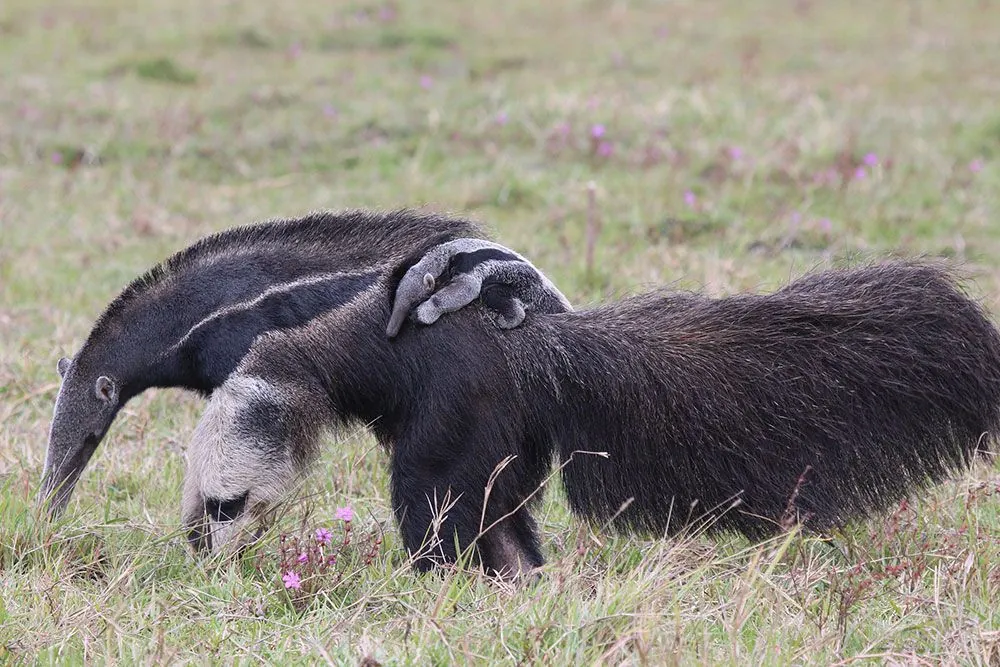
The giant anteater (Myrmecophaga tridactyla), known as tamanduá-bandeira in Brazil, is a fascinating mammal specialized in feeding on ants and termites. It is widely found in grasslands, savannas, and forests across South America, including the Amazon and Pantanal regions.
With its long, tubular snout and sticky tongue, the giant anteater can consume thousands of insects in a single day. Despite its slow movements, it is well-adapted to defend itself with strong claws. A solitary and mostly nocturnal animal, it plays a crucial role in controlling insect populations and maintaining ecological balance.
Unfortunately, habitat destruction and road accidents pose significant threats to this species, making its conservation a priority in many regions of South America.
Characteristics of the Giant Anteater
Scientific Name: Myrmecophaga tridactyla
Size: 1.8–2.4 meters (including tail)
Weight: 33–50 kg (73–110 lbs)
Lifespan: 14 years in the wild
Habitat: Grasslands, savannas, forests (Amazon, Pantanal, Cerrado)
Diet: Insectivorous (ants and termites)
Behavior: Solitary, mostly nocturnal
Distinct Feature: Long snout and sticky tongue for insect feeding
Ecological Role: Controls insect populations, supports ecosystem balance.