
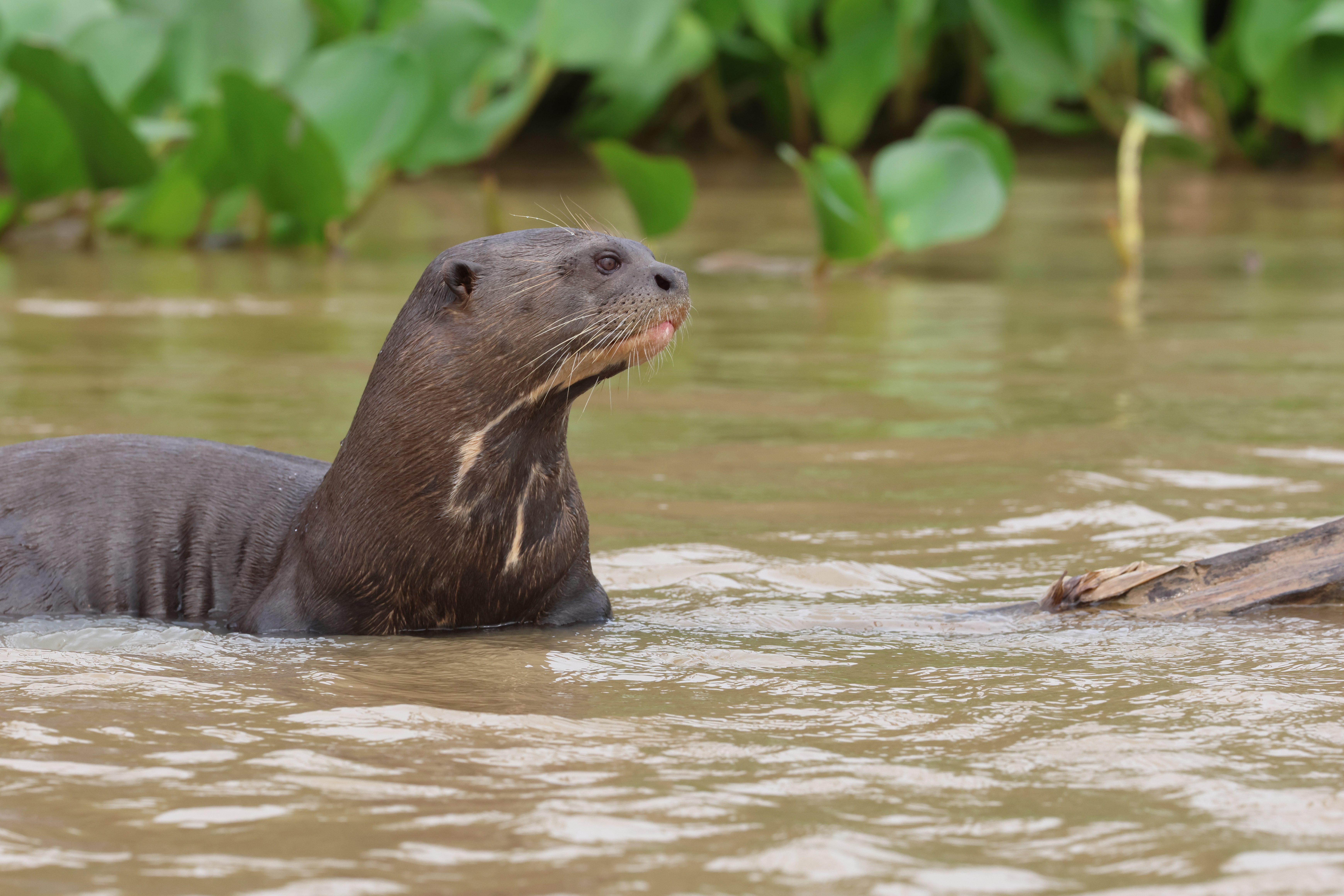
The giant otter (Pteronura brasiliensis), also known as the ariranha, is one of the most charismatic and social mammals of South America. It inhabits rivers, lakes, and wetlands across the Amazon and Pantanal, where it thrives in freshwater ecosystems. Known for its elongated body and dense, water-resistant fur, the giant otter is perfectly adapted to an aquatic lifestyle.
Unlike most otter species, it lives in highly organized family groups and communicates through a wide range of vocalizations. It is an active and skilled predator, feeding mainly on fish and playing a key role in maintaining the balance of aquatic environments. Despite its adaptability, the species faces threats from habitat loss and human activity.
Characteristics of the Giant Otter:
Scientific Name: Pteronura brasiliensis
Size: Up to 1.5–1.8 meters (including tail)
Weight: 22–32 kg (48–70 lbs)
Lifespan: Around 10–13 years in the wild
Habitat: Rivers, lakes, and wetlands (Amazon, Pantanal)
Diet: Carnivorous (mainly fish)
Behavior: Highly social, lives in family groups
Hunting Method: Cooperative hunting in water
Distinct Feature: Elongated body and throat markings unique to each individual
Ecological Role: Top predator in freshwater ecosystems
Conservation Status: Endangered.