
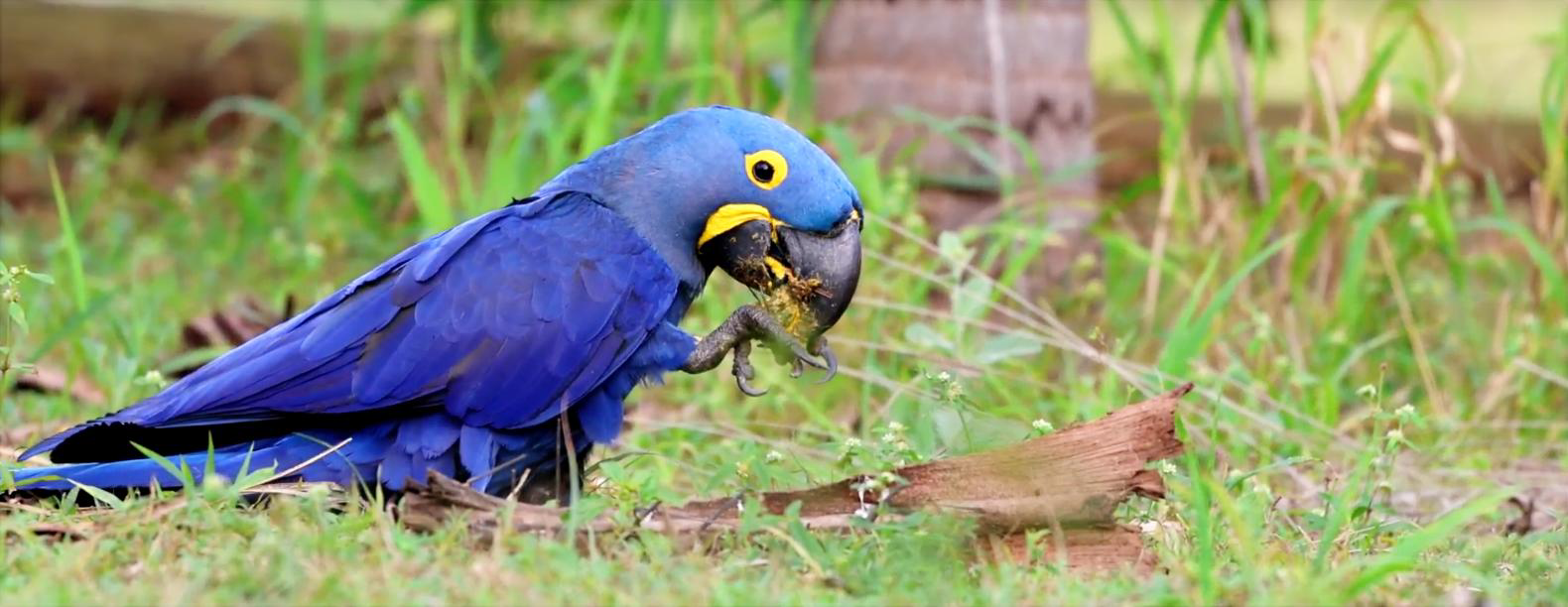
The hyacinth macaw (Anodorhynchus hyacinthinus), known in Brazil as arara-azul-grande, is the largest flying parrot species in the world. Famous for its vibrant cobalt-blue feathers and striking yellow facial markings, it inhabits regions such as the Pantanal, Cerrado, and parts of the Amazon.
This impressive bird is highly intelligent and social, often seen in pairs or small groups. It has a powerful beak capable of cracking hard nuts, especially from palm trees, which make up a large part of its diet. The species plays an important role in seed dispersal, contributing to ecosystem health.
Despite conservation efforts, the hyacinth macaw has faced threats from habitat loss and illegal wildlife trade. Today, it stands as a symbol of wildlife conservation success in Brazil, especially in the Pantanal region.
Characteristics of the Hyacinth Macaw
Scientific Name: Anodorhynchus hyacinthinus
Size: Up to 1 meter (3.3 feet) in length
Weight: 1.2–1.7 kg (2.6–3.7 lbs)
Lifespan: 40–50 years
Habitat: Tropical forests, savannas, and wetlands (Pantanal, Cerrado, Amazon)
Diet: Herbivore (nuts, seeds, fruits)
Behavior: Social, lives in pairs or small groups
Distinct Feature: Bright blue plumage with yellow eye rings and beak base
Ecological Role: Seed disperser.