
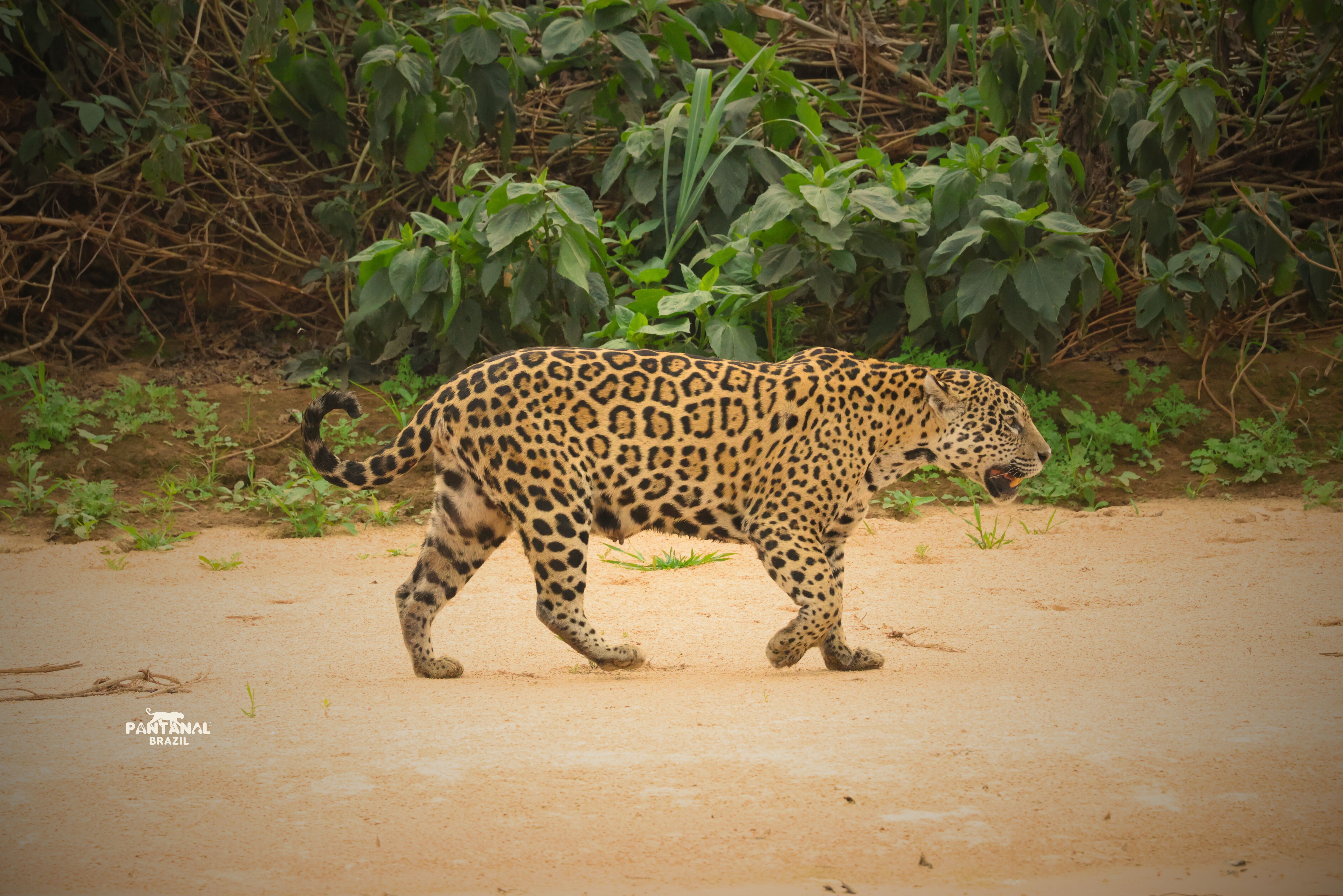
The jaguar(Panthera onca) is the largest big cat in the Americas and one of the most powerful predators in the wild. Recognized by its distinctive rosette-patterned coat, it inhabits diverse environments such as the Amazon rainforest and the Pantanal wetlands. Unlike most felines, jaguars are excellent swimmers and often hunt near water.
They are solitary hunters with an incredibly strong bite, capable of taking down a wide range of prey, including mammals, reptiles, and fish. As an apex predator, the jaguar plays a vital role in maintaining ecosystem balance. However, habitat loss and human conflict continue to threaten its population.
Characteristics of the Jaguar
Scientific Name: Panthera onca
Size: 1.1–1.85 meters (body length)
Weight: 45–120 kg (99–265 lbs)
Lifespan: 12–15 years in the wild
Habitat: Rainforests, wetlands, savannas (Amazon, Pantanal)
Diet: Carnivorous (mammals, reptiles, fish, birds)
Behavior: Solitary and territorial
Hunting Method: Ambush predator with powerful bite
Distinct Feature: Rosette-patterned coat and strong jaw
Ecological Role: Apex predator maintaining ecosystem balance.