
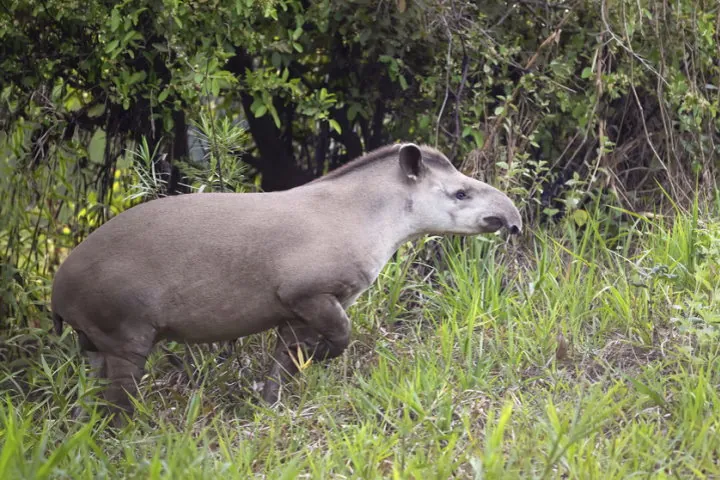
The largest native land mammal in South America.
Characteristics of the Brazilian Tapir:
Scientific Name: Tapirus terrestris
Size: Up to 2.5 meters (8 feet) in length
Weight: Between 150–300 kg (330–660 lbs)
Lifespan: Around 25–30 years
Habitat: Tropical forests, wetlands, and grasslands (Amazon, Pantanal, Cerrado)
Diet: Herbivore (fruits, leaves, aquatic plants)
Behavior: Mostly nocturnal and solitary
Distinct Feature: Flexible, short trunk (proboscis) used for grabbing food
Ecological Role: Important seed disperser, helping forest regeneration
Conservation Status: Vulnerable due to habitat loss and hunting.